Being neurodivergent, such as autism, ADHD, sensory sensitivities, often means navigating more than differences in cognition and behavior. As research grows, a clear pattern emerges: neurodivergent people are more likely to experience a range of health issues beyond mental health, including gastrointestinal disorders, inflammation, shorter life expectancy, sensory and nervous system dysregulation, and physical pain from conditions like hypermobility. Understanding these risks is vital, not to pathologize, but to provide better care, awareness, and support.
For decades, neurodivergence (like Autism and ADHD) has been conceptualized almost exclusively from the perspectives of psychology and education. However, modern science, and specifically Psychoneuroimmunology (PNI), reveals a much more complex reality: the neurodivergent profile is not just a cognitive difference, but a systemic biological configuration that profoundly impacts immunity, gut health, and longevity.
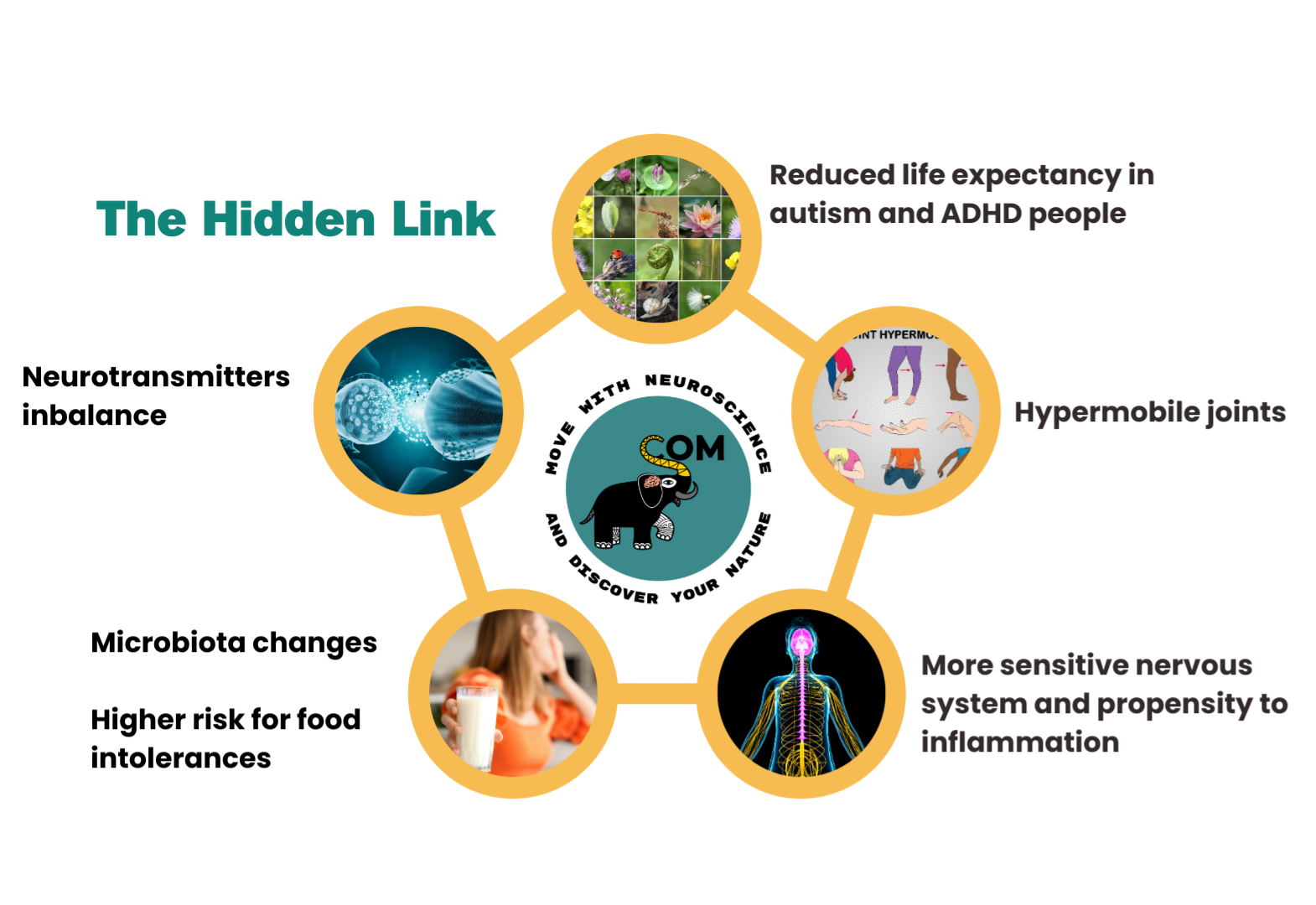
As you can see on the image (neurotransmitter imbalance, hypermobile joints, microbiota changes, nervous system sensitivity) captures many of these overlapping influences. Here’s how they interact:
This network of interactions means neurodivergent people often have compounding risk: one problem (e.g. GI issue) can amplify others (sleep, mood, immune function).
See more details:
A meta-analysis of children and adolescents with Autism Spectrum Disorder (ASD) found that ~33% (95% CI: 13-57%) have gastrointestinal symptoms.
Another systematic review reported that about 55% of autistic children have at least one GI symptom, such as constipation (≈37%), abdominal pain, diarrhea, or bloating, much higher than in neurotypical peers.
These gut issues often correlate with more severe autism symptoms, sleep problems, anxiety, and sensory sensitivity.
Scientific evidence indicates that the gut is the command center of immune function. For the neurodivergent population, this “command center” is often in a state of constant alert.
Prevalence of Symptoms: Meta-analyses indicate that approximately 33% of young people with ASD experience chronic gastrointestinal symptoms, reaching up to 55% in systematic studies that report constipation (37%), abdominal pain, and diarrhea.
The Mechanics of Dysbiosis: The neurodivergent gut microbiota often exhibits reduced diversity, which affects the production of GABA and serotonin (90% of which is synthesized in the gut).
Systemic Impact: Poor gut health and dietary sensitivities lead to increased systemic inflammation, which further dysregulates neurotransmitters, affecting sleep and mood.
Un amplio estudio de cohortes realizado en el Reino Unido demostró que las personas con autismo sin discapacidad intelectual viven, en promedio, unos 6 años menos (hombres) y entre 6 y 7 años menos (mujeres) que sus pares sin autismo. Quienes padecen autismo y discapacidad intelectual experimentan una pérdida de años de vida aún mayor: entre 7 y 10 años para los hombres y entre 14 y 15 años para las mujeres.
Las diferencias resultan de una combinación de problemas de salud física, problemas de salud mental, accidentes y desigualdades estructurales/sociales.
While not every study is meta-analysis, there is evidence that neurodivergent populations often have irregularities in systems tied to dopamine, serotonin, glutamate, GABA, which relate to sleep, regulation, reward, anxiety, and sensory modulation. These imbalances can increase vulnerability to overload, stress, and sleep disruption.
Neural sensitivity (e.g. deep sensory scanning, interoceptive differences) is frequently reported. (While fewer large meta-studies exist here, qualitative and smaller quantitative studies support this.)
There is a fascinating and robust scientific correlation between joint hypermobility and neurodevelopmental disorders. Research led by Dr. Jessica Eccles demonstrates that over 50% of neurodivergent participants exhibit hypermobility, compared to only 20% of the general population.
Many neurodivergent people report hypermobile joints, which lead to chronic pain, postural issues, and higher physical discomfort.
Autonomic dysregulation (dysautonomia) also appears more common: people can experience rapid heart rate, digestive changes, sleep issues, etc.
Implications of Psychoneuroimmunology (PNI): Hypermobility is not just “flexibility”; it is associated with differences in connective tissue that can influence dysautonomia (dysregulation of heart rate, digestion, and sleep).
GI issues, poor nutrition, sleep problems, stress sensitivity all feed into inflammatory responses (e.g. elevated cytokines like IL-6).
In ASD, nutritional and gut health issues increase risk of food intolerances, immune challenges, and inflammatory load.
One of the most alarming and necessary data points to discuss is the disparity in life expectancy. Cohort studies in the UK have shown that autistic individuals without intellectual disability live, on average, 6 to 7 years less than their neurotypical peers.
This reduction is not due to neurodivergence itself, but to a combination of biological and systemic factors:
The “Double Invisibility”: The overlap of invisible chronic conditions with neurodivergent minds often leads to delayed diagnoses and medical dismissal (“it’s just anxiety”), especially in women.
Allostatic Load: The constant effort of masking (social camouflage) and processing a hostile sensory environment keeps the nervous system in a state of permanent stress resistance, depleting the functional reserve of the organs.
Despite these health issues, being neurodivergent (having ADHD, autism) is not a disease per say, yet the evidence clearly shows we face greater risk of physical health issues, due to a combination of:
At Corner of Movement we understand and address these risks, with compassion, research-based interventions, and inclusive systems so we reduce health burdens and enhance quality of life for neurodivergent populations.
We work to address these differences by raising awareness about neurodiversity where everyone naturally belongs in the community and as a part of a natural ecosystem.
Maria Salazar- Founder