Being neurodivergent, such as autism, ADHD, sensory sensitivities, often means navigating more than differences in cognition and behavior. As research grows, a clear pattern emerges: neurodivergent people are more likely to experience a range of health issues beyond mental health, including gastrointestinal disorders, inflammation, shorter life expectancy, sensory and nervous system dysregulation, and physical pain from conditions like hypermobility. Understanding these risks is vital, not to pathologize, but to provide better care, awareness, and support.
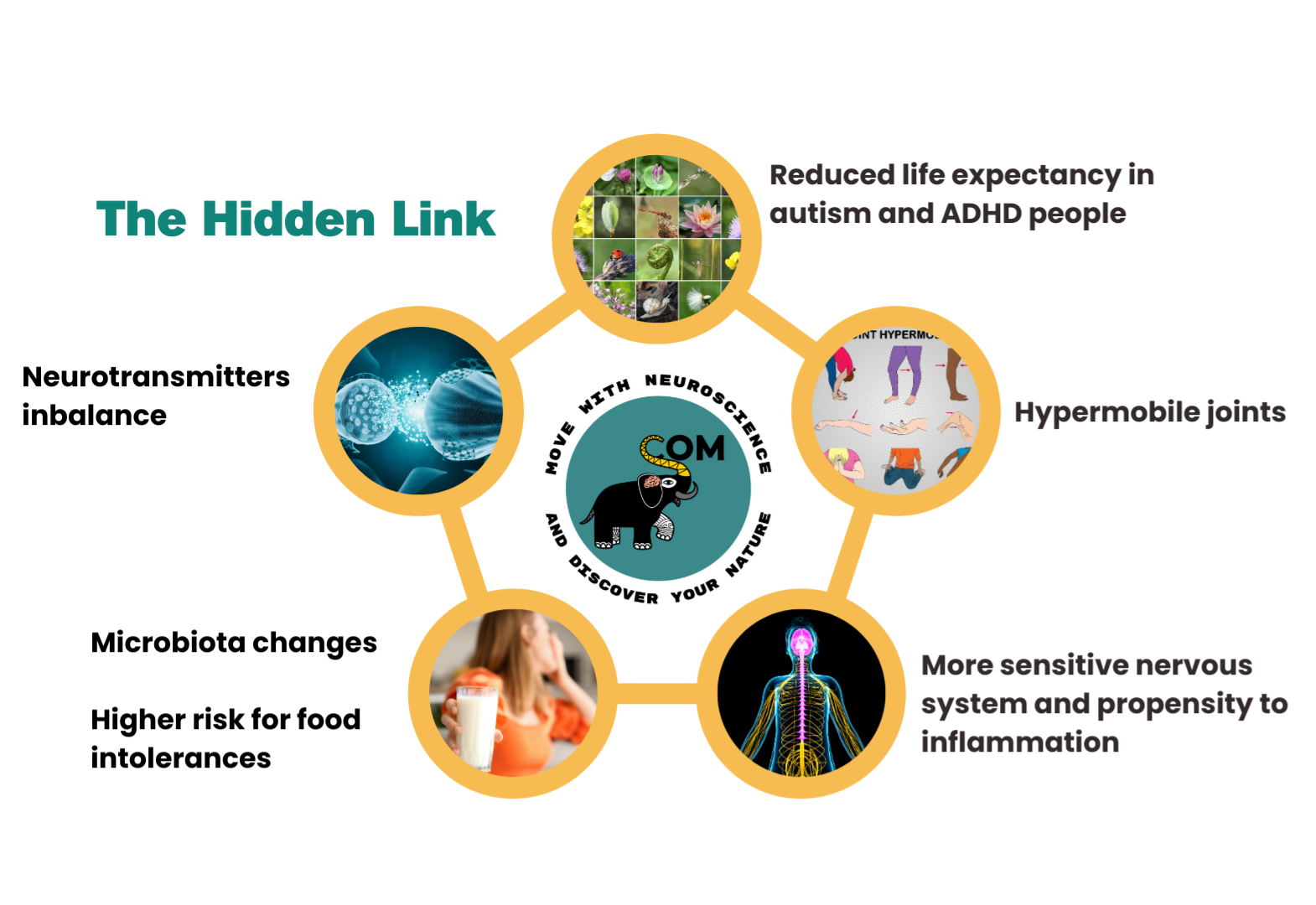
As you can see on the image (neurotransmitter imbalance, hypermobile joints, microbiota changes, nervous system sensitivity) captures many of these overlapping influences. Here’s how they interact:
This network of interactions means neurodivergent people often have compounding risk: one problem (e.g. GI issue) can amplify others (sleep, mood, immune function).
See more details:
A meta-analysis of children and adolescents with Autism Spectrum Disorder (ASD) found that ~33% (95% CI: 13-57%) have gastrointestinal symptoms. PubMed
Another systematic review reported that about 55% of autistic children have at least one GI symptom, such as constipation (≈37%), abdominal pain, diarrhea, or bloating, much higher than in neurotypical peers. PubMed
These gut issues often correlate with more severe autism symptoms, sleep problems, anxiety, and sensory sensitivity. SpringerLink+1
A large UK cohort study showed that autistic individuals without intellectual disability live on average ~6 years less (men) and ~6-7 years less (women) than non-autistic peers. Those with autism + intellectual disability have even larger life years lost: ~7-10 years for men, ~14-15 years for women. PubMed Central+2PubMed+2
Differences result from a mix of physical health problems, mental health issues, accidents, and structural/social disparities. University College London+2PubMed Central+2
While not every study is meta-analysis, there is evidence that neurodivergent populations often have irregularities in systems tied to dopamine, serotonin, glutamate, GABA, which relate to sleep, regulation, reward, anxiety, and sensory modulation. These imbalances can increase vulnerability to overload, stress, and sleep disruption.
Neural sensitivity (e.g. deep sensory scanning, interoceptive differences) is frequently reported. (While fewer large meta-studies exist here, qualitative and smaller quantitative studies support this.)
Recent studies have shown a strong correlation between joint hypermobility and neurodevelopmental disorders. For instance, research led by Dr. Jessica Eccles found that individuals with neurodivergent conditions, such as autism and ADHD, exhibit a higher prevalence of joint hypermobility compared to the general population. Specifically, over 50% of neurodivergent participants demonstrated elevated levels of hypermobility, significantly higher than the 20% prevalence in the general population.
Many neurodivergent people report hypermobile joints, which lead to chronic pain, postural issues, and higher physical discomfort.
Autonomic dysregulation (dysautonomia) also appears more common: people can experience rapid heart rate, digestive changes, sleep issues, etc.
GI issues, poor nutrition, sleep problems, stress sensitivity all feed into inflammatory responses (e.g. elevated cytokines like IL-6).
In ASD, nutritional and gut health issues increase risk of food intolerances, immune challenges, and inflammatory load. SpringerLink+1
Despite these health issues, being neurodivergent (having ADHD, autism) is not a disease per say, yet the evidence clearly shows we face greater risk of physical health issues, due to a combination of:
At Corner of Movement we understand and address these risks, with compassion, research-based interventions, and inclusive systems so we reduce health burdens and enhance quality of life for neurodivergent populations.
We work to address these differences by raising awareness about neurodiversity where everyone naturally belongs in the community and as a part of a natural ecosystem.
Maria Salazar- Founder