Qigong is an ancient Chinese mind-body practice that combines slow, deliberate movements, controlled breathing and focused attention to cultivate and balance life energy or “Qi.” Though the vocabulary is traditional, its effects align with modern neuroscience and psychoneuroimmunology: gentle movement regulates the nervous system, breath influences vagal tone, and attention modulates stress reflexes. Over centuries Qigong has been used for health, longevity and resilience; now a growing body of rigorous research is validating its value in contemporary health contexts.
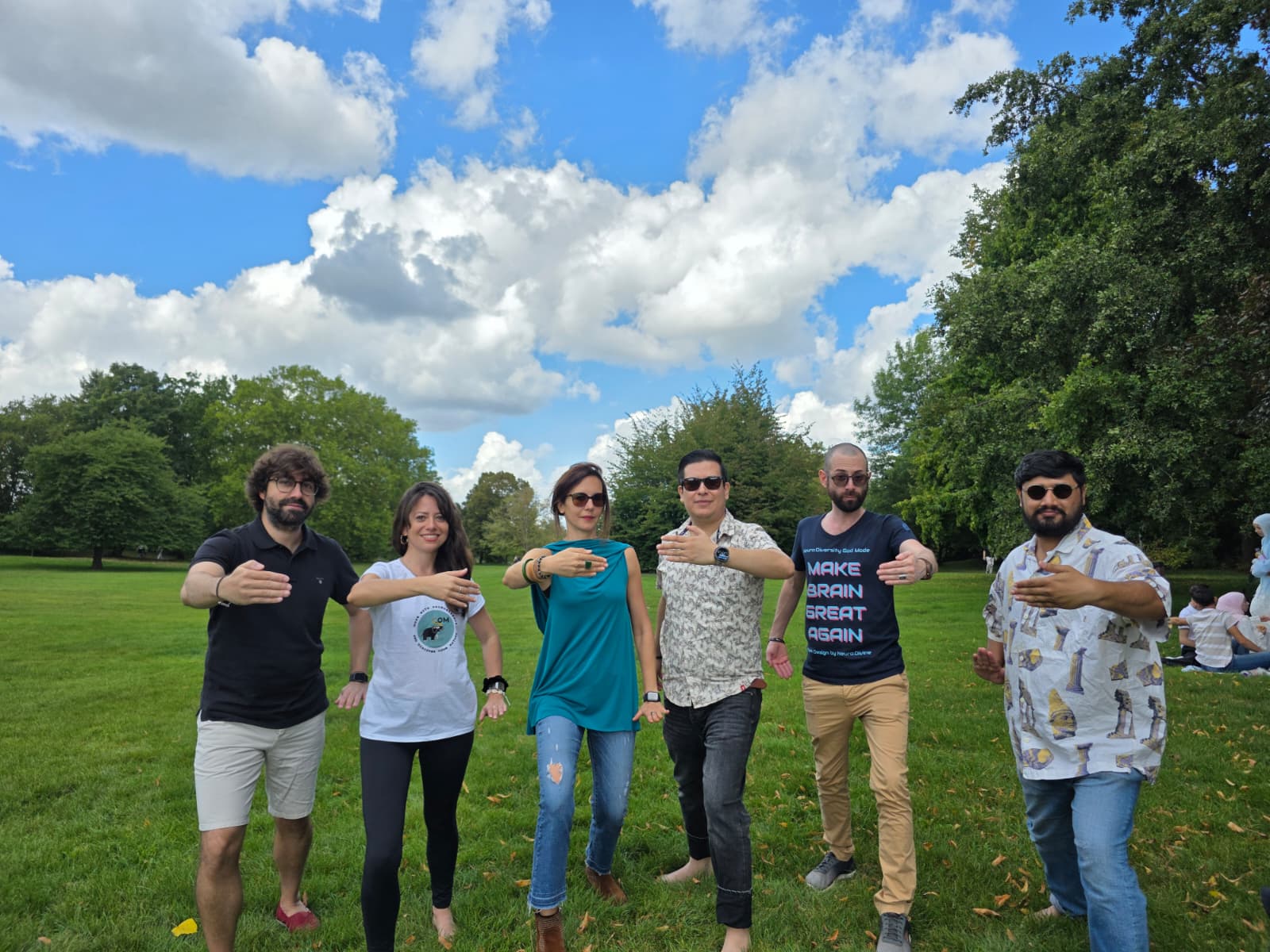
Meta-analyses and systematic reviews reveal that Qigong may be a meaningful adjunctive therapy for depression.
For example, one meta-analysis of randomized controlled trials found a pooled effect size (Hedges’ g) of −0.64 (95 % CI −0.92 to −0.35, I² = 41.7 %) for Qigong in adults with major depressive disorder. PubMed Central+1 Another large review covering 30 studies and 2,328 participants reported a significant reduction in depressive symptom severity (Cohen’s d ≈ −0.48) with Qigong interventions. PubMed Earlier work also found Qigong reduced depression in populations with chronic illnesses (effect size ≈ −0.75 for stress, −0.88 for anxiety in healthy adults) albeit with methodological limits. BioMed Central+1
What might explain these effects? The mechanisms appear to include improved autonomic regulation (increased parasympathetic tone), modulation of stress hormones, enhanced mind-body awareness, and subtle improvements in physical function that feed back into mood and self-efficacy. One systematic review titled “The Neurophysiological and Psychological Mechanisms of Qigong as a Treatment for Depression” explored how neural connectivity, inflammatory markers and cognitive-emotional processing may shift with Qigong practice. PubMed Central
In short: Qigong is not simply physical exercise. It is a mind-body intervention that engages movement, breath and attention, all of which converge to support nervous system balance and mood regulation.
The vagus nerve is the major highway of the parasympathetic nervous system, linking the brain, heart, lungs, gut and immune system. Qigong’s slow movements, diaphragmatic breathing and meditative focus directly stimulate vagal pathways, helping shift the body from sympathetic (“fight/flight”) dominance into parasympathetic (“rest/digest”) states. This supports heart-rate variability (HRV), lowers stress reactivity and restores neuro-immune balance.
Though the direct research connecting Qigong and vagus nerve metrics is still emerging, we know that low-intensity movement with breath focus increases vagal tone, and vagal tone is strongly linked to emotional regulation, digestive function and immune resilience. When Qigong is practiced consistently, it may therefore promote better gut-brain-immune communication, helping those with dysautonomia, chronic stress or neurodivergent nervous systems.

Chronic pain and stress often go hand in hand, sharing pathways of inflammation, nervous system sensitization and movement avoidance. A systematic review of 10 randomized controlled trials found that internal Qigong significantly reduced chronic pain compared to controls (standardised mean difference SMD = −1.23; 95 % CI −2.23 to −0.24). PubMed Another more recent meta-analysis combining Qigong and Tai Chi reported moderate-quality evidence supporting pain reduction and functional improvement in chronic low back pain. Cureus+1
Beyond pain, Qigong has been shown to lower diastolic blood pressure in meta-analysis (SMD ~ −1.64) and improve flexibility, heart rate and mood in younger populations. Frontiers For stress management, a systematic review reported that practicing Qigong for one to three months reduced anxiety (pooled SMD = −0.75) and stress (SMD = −0.88) in healthy adults. BioMed Central
For individuals under chronic stress, neurodivergent professionals, or anyone managing autoimmune-related fatigue or nervous system dysregulation, Qigong offers a gentle, sustainable practice that actively supports nervous system down-regulation, improves movement quality, and fosters embodied resilience.

Because Qigong is low-impact, modifiable, and accessible, it fits seamlessly into workplace wellness programs, individual coaching pathways and retreats — aligning perfectly with the holistic mission of Corner of Movement.
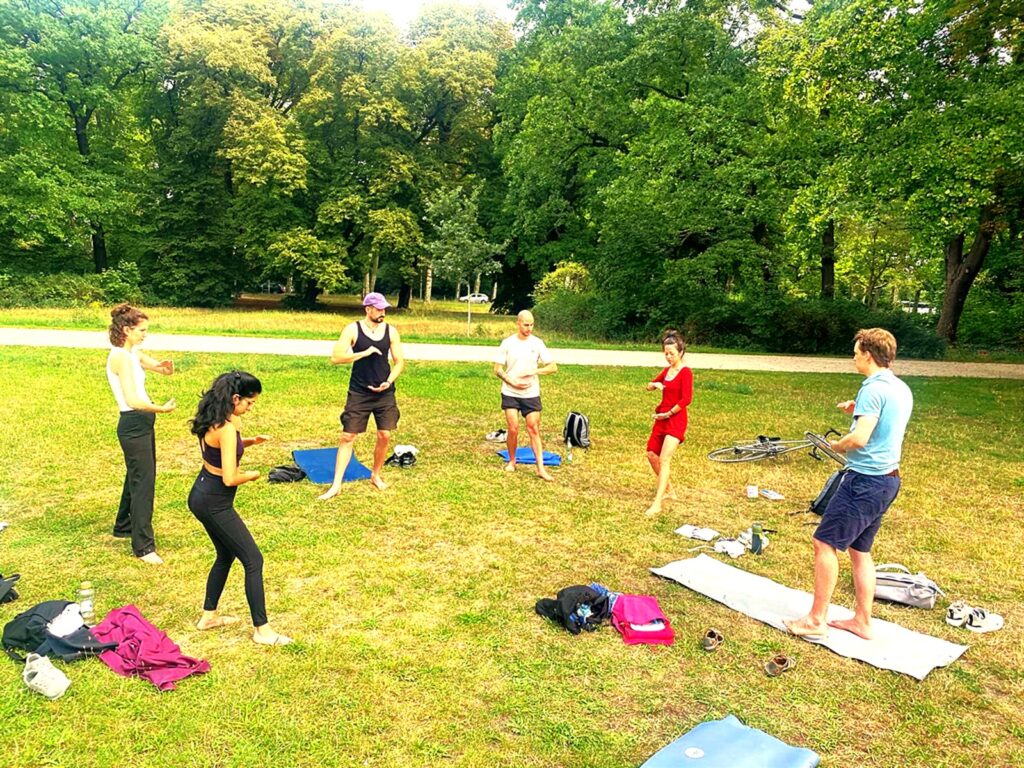
If you’re ready to move beyond “just another workout” and step into a practice that nurtures your nervous system, body and mind, consider our tailored pathways at Corner of Movement.
Our PNI health coaching sessions integrate Qigong to support neurodivergent and autoimmune-aware clients.
Our Healthy Productivity corporate workshops include Qigong modules to enhance team nervous-system resilience and performance culture. And our Qigong group sessions and retreats provide deep embodiment, breath-work and community support in a rejuvenating environment.
Join us to unlock greater calm, clarity, movement freedom and sustainable health. Your nervous system will thank you.

Maria Salazar- Founder